> aeropuerto internacional de Guadalajara
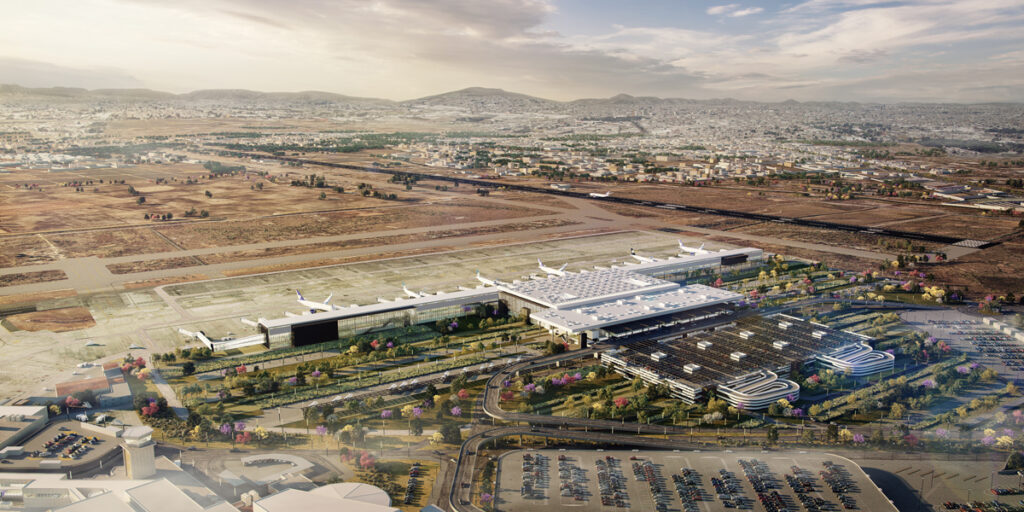
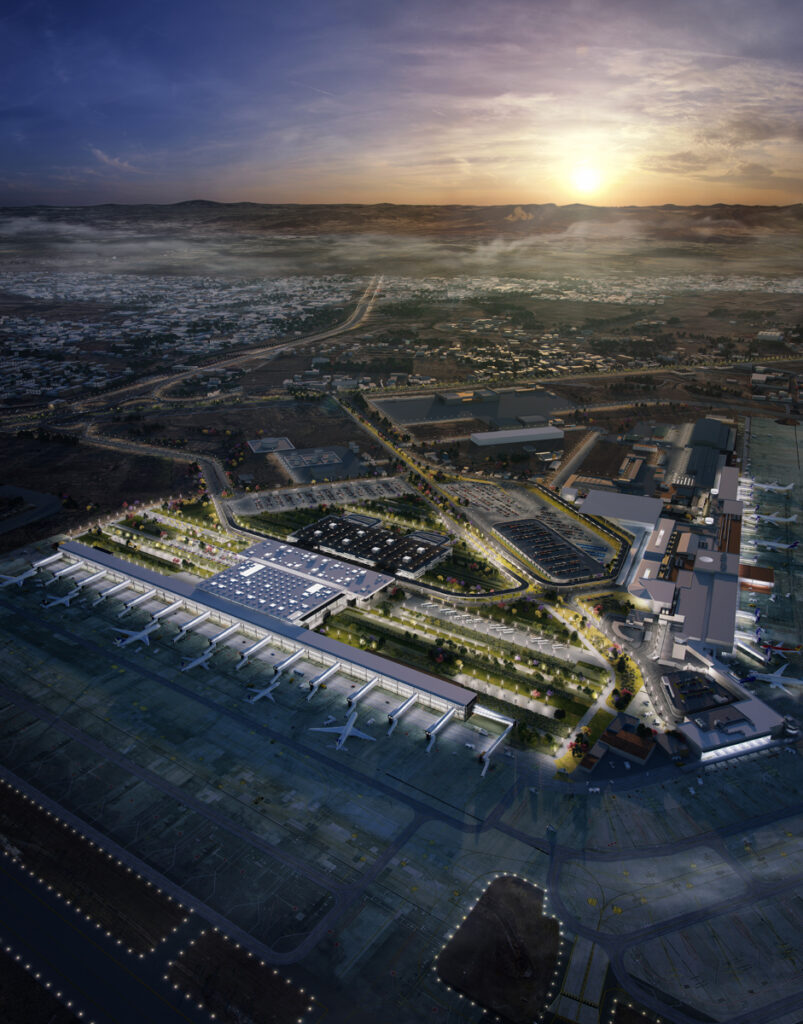
New Passenger Terminal Project – Guadalajara International Airport In collaboration with Estudio Lamela, the new passenger terminal has been designed to deliver an efficient and comfortable experience for travelers, with a clear separation between arrival and departure flows.
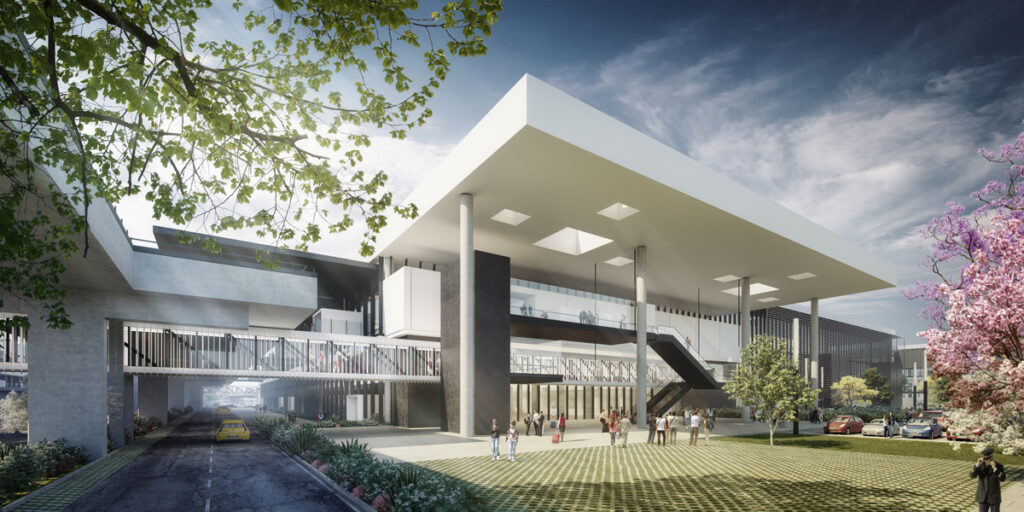
Upon arrival at the terminal by land, independent exterior traffic lanes have been implemented for each mode of transport—taxis, private vehicles, buses, and rental cars—optimizing mobility and accessibility to the airport. These circulation patterns are engineered for high efficiency, significantly reducing waiting times.
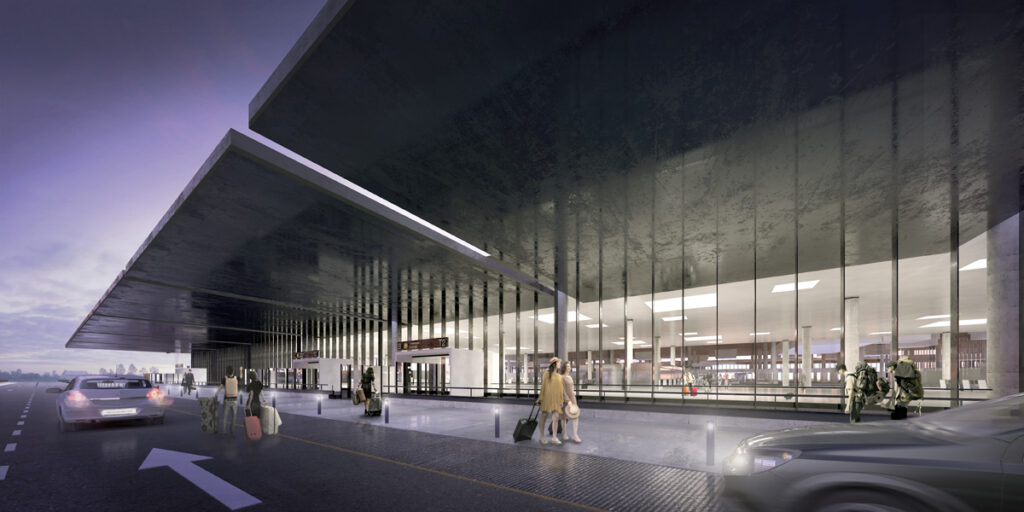
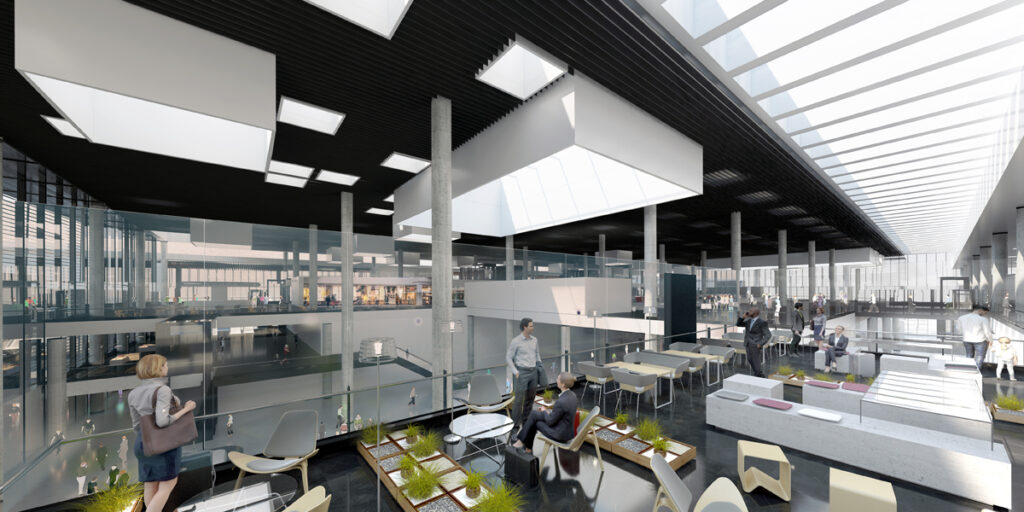
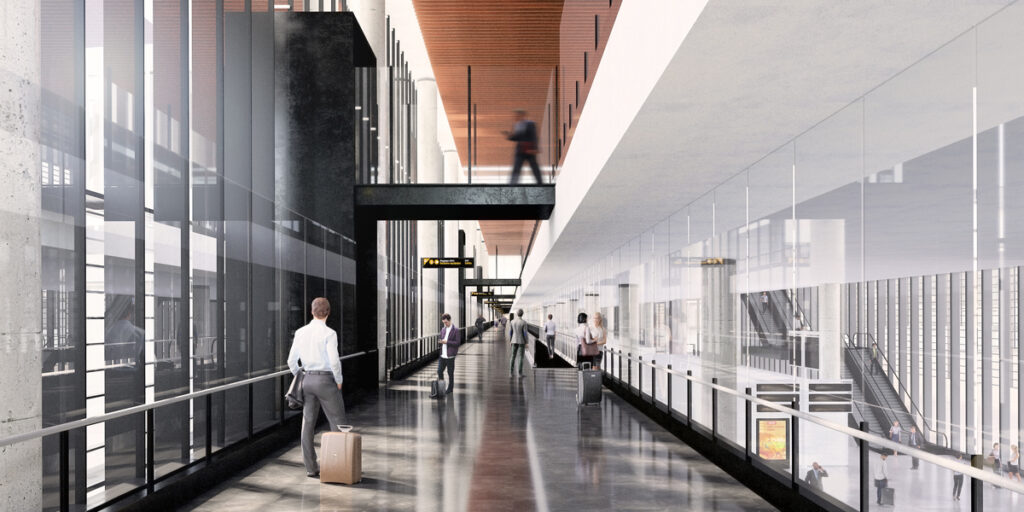
Passenger traffic is distributed vertically across different levels. Departures are located on the second floor, accessed via an exterior drop-off area, and include retail spaces, check-in counters, and security screening zones. From here, passengers reach the main boarding lounge, which connects to a pier with fifteen serviced gates capable of operating for both arrivals and departures.
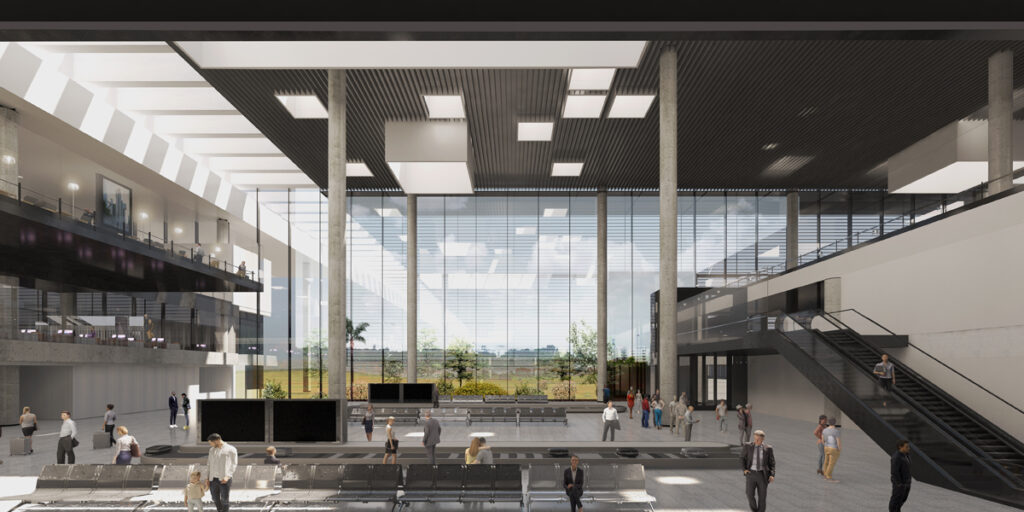
Arrivals are organized on the ground floor, where passengers pass through a corridor before proceeding to the immigration hall and then to the baggage claim area. Commercial spaces are arranged at the terminal’s exit to enhance passenger services.
The façade features metallic louvers and solar-shading screens, while the roof design allows natural zenithal light to enter, creating a sense of openness. The interior layout integrates courtyards within the passenger flow areas, contributing to a bright and welcoming atmosphere.
Its modular structural system enables future expansions without compromising the original design, allowing the terminal to grow and adapt seamlessly to evolving air traffic demands.


New Passenger Terminal Project – Guadalajara International Airport In collaboration with Estudio Lamela, the new passenger terminal has been designed to deliver an efficient and comfortable experience for travelers, with a clear separation between arrival and departure flows.
Upon arrival at the terminal by land, independent exterior traffic lanes have been implemented for each mode of transport—taxis, private vehicles, buses, and rental cars—optimizing mobility and accessibility to the airport. These circulation patterns are engineered for high efficiency, significantly reducing waiting times.
Passenger traffic is distributed vertically across different levels. Departures are located on the second floor, accessed via an exterior drop-off area, and include retail spaces, check-in counters, and security screening zones. From here, passengers reach the main boarding lounge, which connects to a pier with fifteen serviced gates capable of operating for both arrivals and departures.
Arrivals are organized on the ground floor, where passengers pass through a corridor before proceeding to the immigration hall and then to the baggage claim area. Commercial spaces are arranged at the terminal’s exit to enhance passenger services.
The façade features metallic louvers and solar-shading screens, while the roof design allows natural zenithal light to enter, creating a sense of openness. The interior layout integrates courtyards within the passenger flow areas, contributing to a bright and welcoming atmosphere.
Its modular structural system enables future expansions without compromising the original design, allowing the terminal to grow and adapt seamlessly to evolving air traffic demands.