> bank Sohar Omán
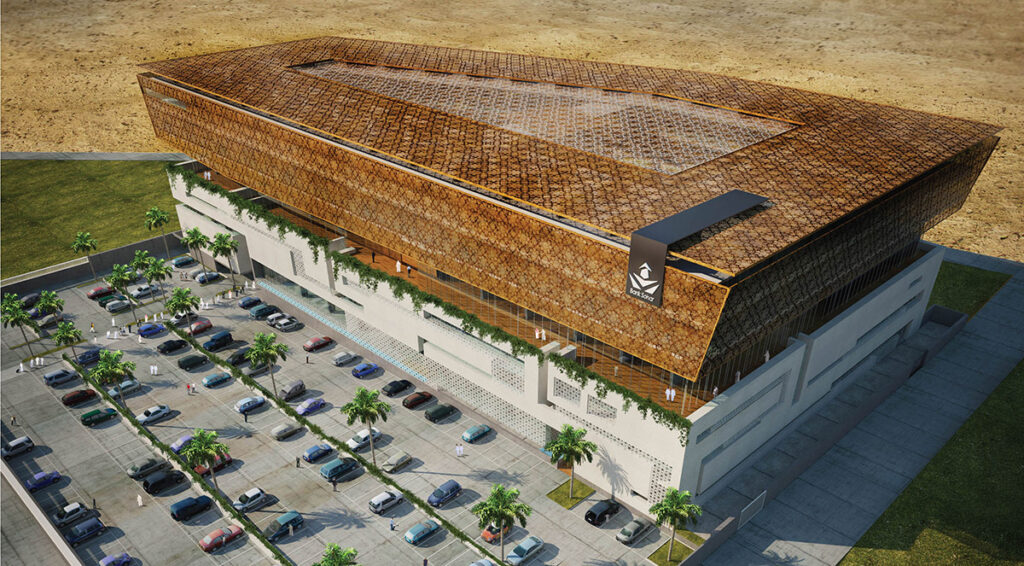
The architectural competition, developed in collaboration with Estudio Lamela, proposed a building with one part intended for the bank’s own use and the rest for rental spaces.
Given the extreme climate and sun conditions, it was proposed to locate the corporate offices in the safest and most representative area, providing shade and shelter for the other uses.
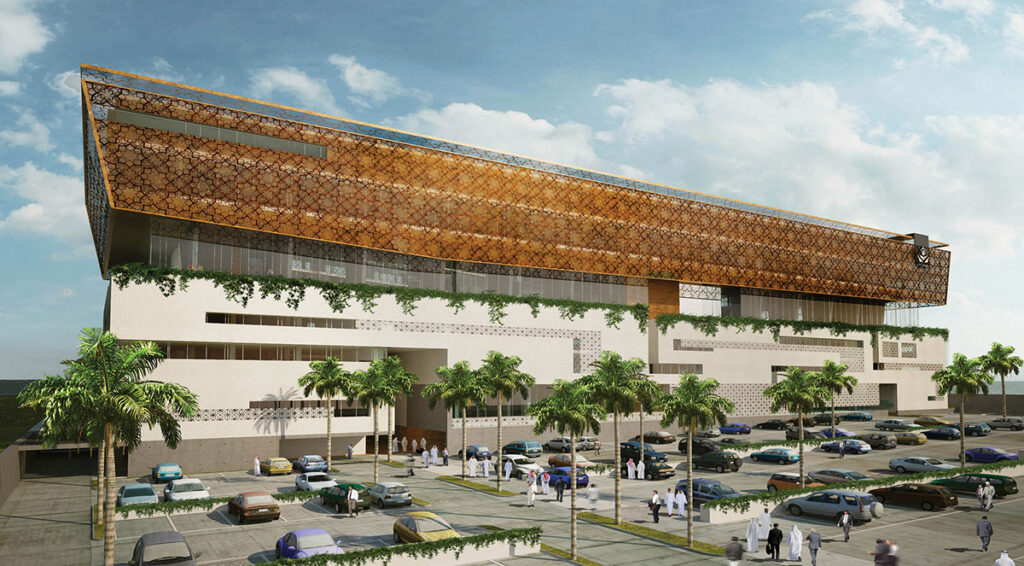
The offices on the lower levels evoke the solidity of Omani fortresses, serving as both a symbolic and functional reference.
An independent access was designed for the bank’s corporate offices, serving security and institutional image purposes
The podium has only two openings corresponding to the separate entrances for the Bank and tenants, which protects the inner courtyard from the wind and transforms it into a central oasis.
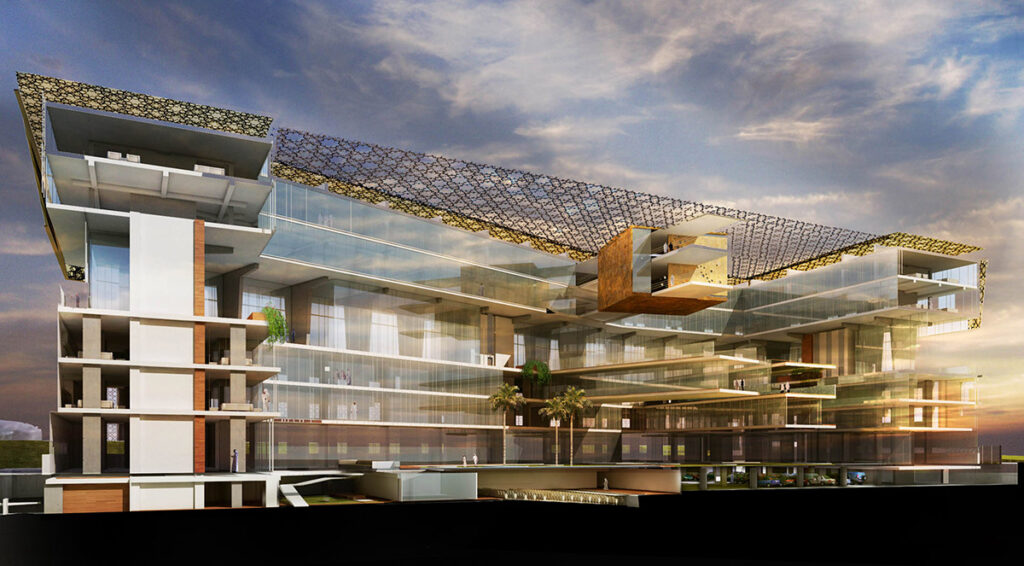
The underground parking is reserved for the bank, while tenants have exterior spaces sheltered by palm trees.
Public uses are located on the lower floors and on a commercial level overlooking the sea.
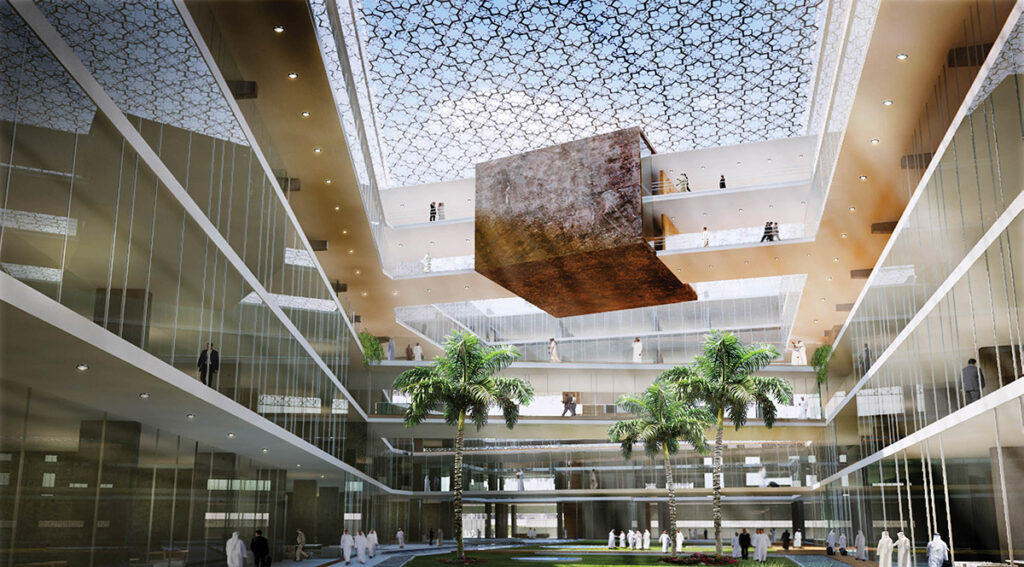
The main lobby of the Bank extends into an interior courtyard with a waterfall and lush vegetation; from this space, a diagonal view runs through the building, reflecting the power of the Institution.
The location of the main entrance was conceived to preserve the natural ground levels as much as possible, aligning it with the street level and reducing rock excavation by 16,500 m³ —a 43% saving compared to what was established in the competition brief.
A secondary, more private access serves maintenance and service requirements from the side street.
The proposal includes separate circulation cores for the Bank and tenants, ensuring security and privacy, while maintaining the flexibility to unify them in the future if required.
Across the central courtyard, three bridges provide elevated views and terraces accessible to all users. The first two can accommodate representative offices or singular spaces, while the third houses a cube dedicated to a prayer area.
The roofs of these bridges are designed as hanging gardens, adding freshness and landscape value to the complex.


The architectural competition, developed in collaboration with Estudio Lamela, proposed a building with one part intended for the bank’s own use and the rest for rental spaces.
Given the extreme climate and sun conditions, it was proposed to locate the corporate offices in the safest and most representative area, providing shade and shelter for the other uses.
The offices on the lower levels evoke the solidity of Omani fortresses, serving as both a symbolic and functional reference.
An independent access was designed for the bank’s corporate offices, serving security and institutional image purposes
The podium has only two openings corresponding to the separate entrances for the Bank and tenants, which protects the inner courtyard from the wind and transforms it into a central oasis.
The underground parking is reserved for the bank, while tenants have exterior spaces sheltered by palm trees.
Public uses are located on the lower floors and on a commercial level overlooking the sea.
The main lobby of the Bank extends into an interior courtyard with a waterfall and lush vegetation; from this space, a diagonal view runs through the building, reflecting the power of the Institution.
The location of the main entrance was conceived to preserve the natural ground levels as much as possible, aligning it with the street level and reducing rock excavation by 16,500 m³ —a 43% saving compared to what was established in the competition brief.
A secondary, more private access serves maintenance and service requirements from the side street.
The proposal includes separate circulation cores for the Bank and tenants, ensuring security and privacy, while maintaining the flexibility to unify them in the future if required.
Across the central courtyard, three bridges provide elevated views and terraces accessible to all users. The first two can accommodate representative offices or singular spaces, while the third houses a cube dedicated to a prayer area.
The roofs of these bridges are designed as hanging gardens, adding freshness and landscape value to the complex.